After summer heat, the lawn often needs some care. Autumn is the right time to clean, aerate, overseed and prepare it for cooler days.
Summer can be quite demanding for the lawn. High temperatures, drought, frequent foot traffic, children playing, pets and garden furniture can all leave visible marks. By the end of summer, the lawn may be thinned, yellowed, compacted or full of dry debris. This is why early autumn, especially September and October, is the ideal time to give it a little more attention.
In autumn, temperatures are usually lower and the soil already contains more moisture, so grass can recover more easily than during summer heat. Good autumn care helps the lawn strengthen its root system, thicken up and prepare better for the cooler months.
Start by Inspecting the Lawn Carefully
Before you begin, inspect the lawn carefully. Look at where it is most damaged, where the soil is compacted, where moss is appearing and where there are bare or sparsely covered patches. This will make it easier to decide what the lawn really needs.
You do not need to carry out every measure every year. On a well-maintained lawn, mowing, removing leaves and light raking are sometimes enough. But if the lawn looks tired, compacted or uneven after summer, it will benefit from more thorough measures such as aeration, overseeding and repairing damaged areas.
Remove Leaves, Moss and Dead Debris
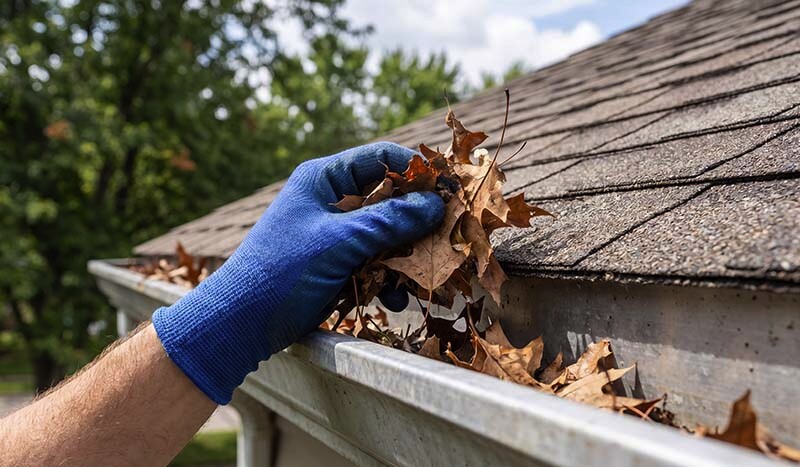
In autumn, leaves, dead grass, moss and other plant debris start to build up on the lawn. If they are left for too long, they can hold moisture, shade the grass blades and create conditions for thinning lawn or disease development.
First, rake the lawn with spring-tine rakes. This removes dry debris and the layer of dead material that builds up between the grass blades. Do not be too rough, especially if the lawn is weakened or waterlogged. The goal is not to damage the surface, but to allow air and water to reach the soil more easily.
If there is a lot of moss or a dense layer of dead material on the lawn, more thorough aeration or scarifying can also be useful. After such treatment, the lawn may look thinner for a while, but under suitable conditions it often recovers and thickens quite quickly.
Aerate Compacted Soil
In summer, soil often becomes compacted, especially in areas where people walk a lot, where children play or where garden furniture often stands. Compacted soil makes it harder for air and water to circulate, and roots develop less well.
For smaller lawns, you can use a garden fork. Make holes in the soil, especially in the most heavily used parts of the lawn. For larger areas, you can use a dedicated lawn aerator. It is important that aeration is carried out when the soil is not too dry and hard, but also not completely waterlogged.
Aeration helps water penetrate the soil more easily, gives the roots more air and prepares the lawn better for autumn rainfall and winter dormancy.
Repair Bare and Damaged Patches
If bare, sparsely covered or damaged patches have appeared on the lawn after summer, autumn is the right time for overseeding. The soil is still warm enough, and there is usually more moisture, so the seed has good conditions for germination.
First, lightly loosen the surface of the damaged area. Remove dead grass, small stones and weeds, then add a thin layer of good-quality growing medium or compost. Scatter the seed evenly over the surface, press it lightly into the soil and water gently.
Over the following weeks, keep the surface evenly moist, but not waterlogged. Avoid walking on freshly sown areas as much as possible until the grass is well rooted. If the damage is more extensive, you can also use turf instead of overseeding, although for most home gardens overseeding is a practical enough solution.
Autumn Fertilising Should Support the Roots
Autumn fertilising is not the same as spring fertilising. In spring, we want to encourage lush green growth, while in autumn, strengthening the roots is more important and so is improving the lawn’s resistance before the cooler months. This is why you should use a fertiliser intended specifically for autumn lawn care.
Do not overdo fertilising. Follow the manufacturer’s instructions and spread the fertiliser as evenly as possible. It is best to fertilise before forecast rain or lightly water the lawn after fertilising so that the nutrients can be absorbed into the soil more easily.
If the lawn is not heavily depleted, fertilising may not even be necessary. In natural-style gardens, or where you want to encourage greater plant diversity, you can care for the lawn more moderately and focus mainly on improving the soil, aeration and regularly removing leaves.