Summer hedge trimming should be thoughtful, moderate and adapted to the plant, the weather and the natural life in the garden. This way, your hedge will stay neat, dense and healthy.
A hedge is an important part of the garden. It divides the space, provides privacy from passers-by and neighbours, softens the wind and gives the garden structure. At the same time, it creates valuable shelter for birds, insects and beneficial pollinators.
In summer, many hedges quickly lose their shape, as young shoots grow vigorously, hang over paths or spread towards neighbouring plots. This is why summer trimming is often necessary, but it should be done with care.
At this time of year, plants should not usually be cut back hard or rejuvenated. Instead, the focus should be on light maintenance shaping. The aim of summer trimming is to remove overly long shoots, tidy up the shape and maintain dense, healthy growth.
When to Trim a Hedge in Summer
Choose a dry but not too hot day for trimming. The best time is early in the morning or late in the afternoon, when the sun is not as strong. Cutting in the heat of the day can put additional stress on the plant, while freshly cut areas may dry out or turn brown more quickly.
If the hedge is already under stress due to drought, a heatwave or poor growth, it is better to wait before trimming. After cutting, the plant needs enough strength to recover, and extreme conditions do not help with this. It is also not advisable to trim immediately after heavy rain, when the shoots are wet, as the work is less precise and the plants are more sensitive.
For most well-maintained hedges, light maintenance trimming is enough in summer. Heavy cutting, deep rejuvenation pruning or cutting into old wood is better left for a more suitable time, depending on the type of plant.
Check for Nesting Birds Before Trimming
Before you pick up the shears, inspect the hedge carefully. A dense hedge can provide important shelter for birds, which may use it as a safe place to nest, especially from spring to late summer. If you notice birds frequently flying to the same spot, staying inside the hedge or hear chicks calling, this may be a sign of an active nest. In this case, postpone trimming or only tidy the areas where you are certain you will not disturb the birds.
In Summer, Shape Rather Than Cut Back Hard
Summer trimming should mainly be about shaping. This means removing shoots that stick out from the main outline, tidying the edges and lightly trimming the top if it has become overgrown. Avoid cutting too deeply into the hedge, especially with evergreen hedges and conifers.
Some plants do not regrow well from old wood. If they are cut back too hard, empty, brown or bare patches can appear in the hedge and may take a long time to fill in. It is therefore safer to cut less and work gradually. If you are not sure how hard a particular plant can be trimmed, follow the rule that in summer you should mainly remove fresh, young growth.
For regularly trimmed hedges, summer shaping is important for keeping a neat appearance. With more natural, flowering or fruiting hedges, however, the cut does not need to be perfectly precise. These hedges can keep a slightly more relaxed shape, which is also beneficial for birds and pollinators.
How to Shape a Hedge Properly
When deciding on the final shape of a hedge, it is important that the lower part is not narrower than the top. Ideally, the hedge should be slightly wider at the base and a little narrower towards the top. This allows light to reach the lower parts of the plant, helping the hedge remain dense all the way down to the ground.
If the top is too wide, the lower parts gradually receive too little light and begin to thin out. This is a common problem with older hedges that are full and lush at the top but bare at the bottom.
For straight, regularly trimmed and precisely shaped hedges, you can use a taut string as a guide. Start by trimming the sides, then finish with the top. Work gradually and step back several times to check the shape. This will help you spot uneven areas and avoid cutting too much in one place.
Which Tools to Use
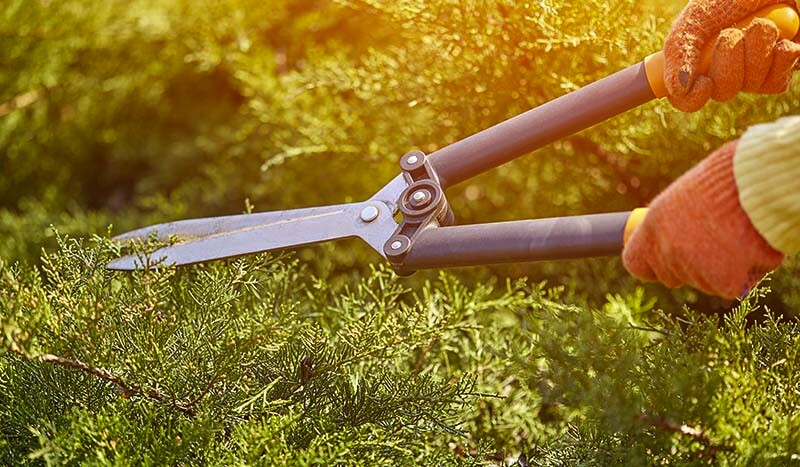
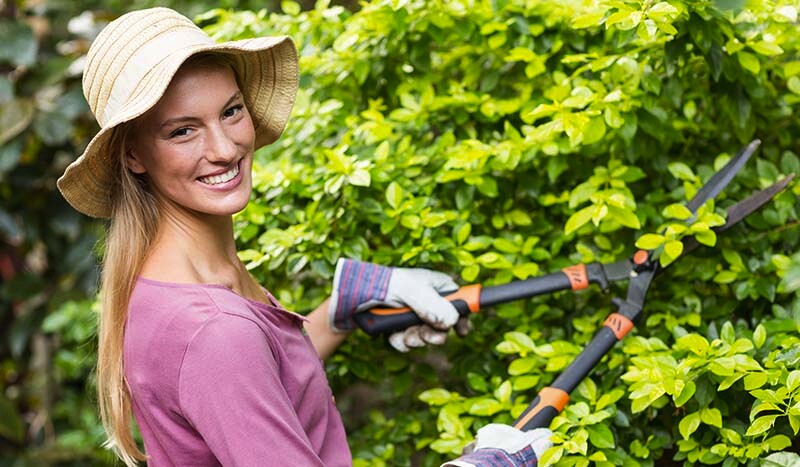
For smaller hedges and precise adjustments, hand hedge shears are a good choice. They give you better control over the cut, especially on plants with larger leaves, where an electric hedge trimmer may cut through the leaves and leave a less attractive finish.
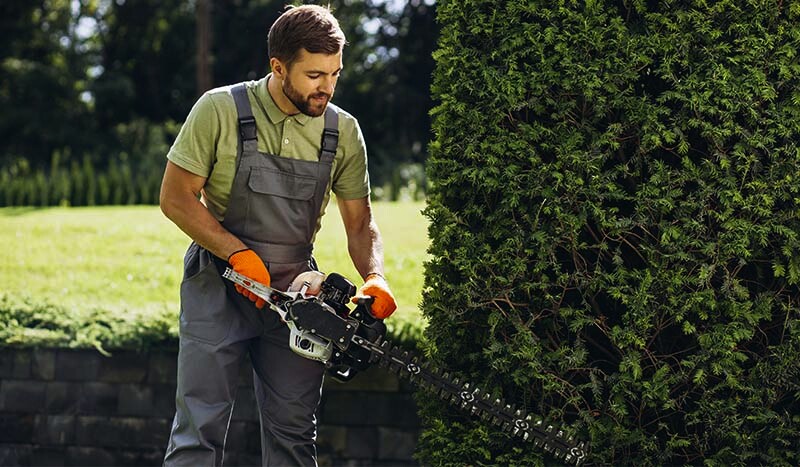
For longer hedges, electric or cordless hedge trimmers are practical and make the work much easier. For thicker branches, use loppers, as ordinary shears will not make clean cuts. For taller hedges, telescopic tools can be useful, while work on a ladder should always be done with stability and safety in mind.
Tools should always be sharp and clean. A blunt blade tears the shoots instead of cutting them cleanly, which puts additional stress on the plant. When working, use protective gloves, and safety glasses are also recommended when using electric hedge trimmers.
Caring for a Hedge After Trimming
After trimming, remove the cut shoots, especially from the top and from inside the hedge. Healthy plant material can be composted, while diseased parts or pieces affected by pests should be disposed of separately.
If the weather is dry, water the hedge after trimming if needed, especially if the plants are young or growing in very free-draining soil. Water at the base rather than over the leaves, and water thoroughly but less often rather than frequently and superficially.
In hot weather, avoid heavy fertilising immediately after trimming, as this can push the plant into new growth at a time when it is already using energy to recover. Mulch at the base is more useful, as it helps retain moisture, reduces weed growth and protects the roots from overheating.
Keep the Hedge Nature-Friendly
A hedge is not only an aesthetic element of the garden, but also a valuable habitat for birds, beneficial insects and other small animals. With mixed, flowering or fruiting hedges, it is therefore not always necessary to trim them completely evenly every year. Where they do not block paths or views, you can leave part of the hedge slightly more relaxed.
Summary
Summer hedge trimming should be a balance between neatness and respect for nature. If you choose the right time, check for possible nests, use sharp tools and trim moderately, your hedge will stay dense, healthy and beautiful throughout the summer.
Sources
- RHS – Pruning hedges
- BBC Gardeners’ World – How to Trim a Hedge
- RHS – How to trim a hedge
- RHS – Hedge and woodland edge habitats
- RSPB – Birds’ nests and nestboxes