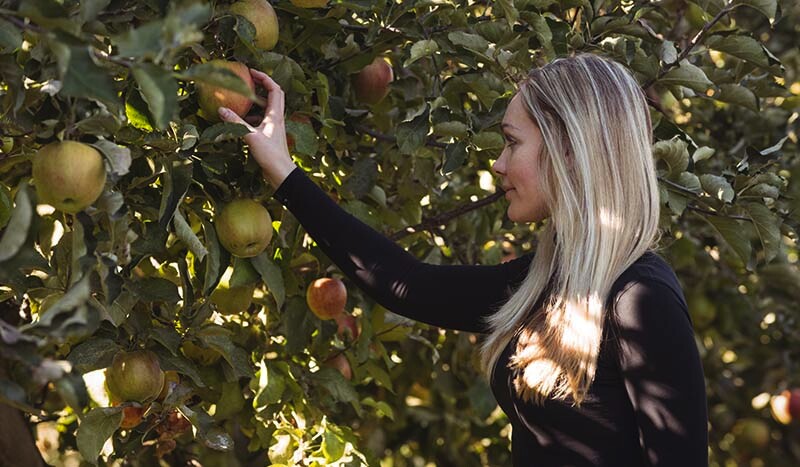
Even in a smaller garden, you can create a fruit-growing corner with a generous harvest. Discover which types of fruit trees are suitable for limited space.
A small garden does not mean you have to give up on home-grown fruit. Today, there are many compact varieties and special rootstocks that make it possible to grow fruit trees successfully even on smaller plots, along fences, on terraces or even in larger pots.
The most important thing is to choose the right type of fruit tree, a suitable rootstock and the right planting location.
When planning a smaller garden, the principle of “less, but well thought out” works very well. Instead of planting one large tree that shades half the garden, you can plant several smaller or columnar fruit trees and enjoy a varied harvest through much of the season.
Why the Rootstock Is More Important Than the Variety
When buying fruit trees, many people first think about the apple or cherry variety. In reality, however, when it comes to a small garden, the choice of rootstock is often even more important. The rootstock determines how large the tree will grow, how quickly it will bear fruit and how much space it will need.
For apple trees, the following rootstocks are especially suitable for smaller gardens:
– M27, very dwarf growth,
– M9, dwarf growth,
– M26, small to medium growth.
Trees on these rootstocks often grow only between 1.5 and 3 metres tall, which makes them easier to prune and harvest.
Tip
When buying a fruit tree, always ask which rootstock it has been grafted onto. The same apple variety can grow into a completely different-sized tree depending on the rootstock.
Apple Trees – The Best Choice for a Smaller Garden
Apple trees are among the most popular fruit trees for smaller gardens, as there are many compact varieties and different training forms available.
They also grow well as:
– columnar trees,
– cordons grown along a support,
– espalier-trained trees grown against a wall or fence.
For smaller gardens, the following varieties are often recommended:
– ‘Discovery’,
– ‘Gala’,
– ‘Topaz’,
– ‘Golden Delicious’,
– ‘Fuji’.
‘Topaz’ is a popular variety for home gardens because of its good disease resistance.
Columnar apple trees take up very little space and are suitable even for narrow gardens or larger containers on a terrace.
Tip
If you have very limited space, you can train an apple tree as an espalier against a south-facing wall. This way, the tree grows flat along a support and takes up very little room.
Cherries and Plums for Smaller Areas
Many people think that cherry trees are too large for a home garden, but today compact varieties on weaker rootstocks are also available. For smaller gardens, cherries on Gisela 5 rootstock are especially suitable, as they remain much smaller than traditional trees.
For plums, the following are good choices:
– ‘Stanley’,
– ‘Santa Rosa’,
– various semi-dwarf varieties.
Plums often require less care than some other types of fruit, which makes them a good choice for beginners.
Tip
If you are looking for a low-maintenance fruit tree, consider a plum tree. Many varieties produce well even without more demanding pruning.
Fruit Trees in Pots
Some types of fruit trees can also be grown successfully in larger pots or planters. This is an excellent solution for small gardens, terraces or balconies.
The following grow well in containers:
– columnar apple trees,
– dwarf pear trees,
– fig trees,
– lemon trees and other citrus trees,
– smaller peach or nectarine trees.
It is important that the containers have good drainage and enough quality growing medium.
Tip
The fig variety ‘Brown Turkey’ is very popular for smaller gardens and terraces, as it also grows well in larger pots and can be kept compact with pruning.
Figs originate from a Mediterranean climate, so they need plenty of warmth, sun and protection from cold winds in order to crop well. In colder areas, it is advisable to plant them against south-facing walls or grow them in larger containers that can be additionally protected in winter.
Make Use of Vertical Space Too
In a small garden, it also makes sense to think vertically. Fruit trees can be trained along walls, fences or pergolas, saving a great deal of space.
The following are especially suitable for this type of growing:
– apple trees,
– pear trees,
– peach trees,
– apricot trees.
Trees grown in this way are often better protected from wind and cold, while the wall can also radiate additional warmth.
Tip
Pears trained against a warm south-facing wall often ripen better and develop sweeter fruit.
How to Choose the Right Tree for Your Garden
Before buying a fruit tree, consider:
– how much space you have,
– how much sun your garden receives,
– whether you want early or late varieties,
– how much care you are willing to give the tree.
For a smaller garden, several smaller trees are often a better choice than one large tree.
It is also good to check:
– whether the variety is self-fertile,
– whether it needs a pollination partner,
– how disease-resistant it is.
Tip
If you only have space for one tree, choose a self-fertile variety. This way, you will not need an additional pollinator to get a harvest.
Summary
Even a smaller garden can become a rich fruit-growing corner if you choose suitable fruit tree types and rootstocks. Compact forms, columnar varieties and fruit trees grown in pots make it possible to grow home-grown fruit even in limited space.
With some planning and a thoughtful choice of trees, you can create a garden that is beautiful, practical and full of delicious home-grown fruit.
Sources
- RHS – Fruit Trees: Choosing the Best
- RHS – Rootstocks for Fruit Trees
- Frank P Matthews – Fruit Trees for Small Gardens
- Green Harvest – Fruit Trees for Small Gardens
- RHS – Apples: Choosing Cultivars