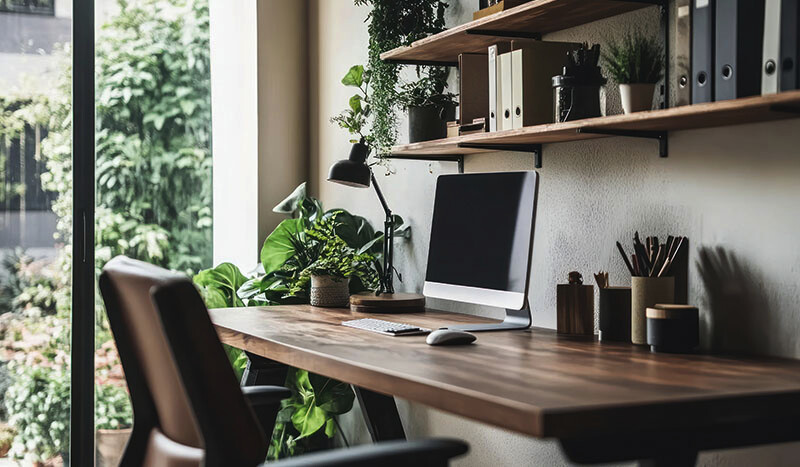
An organized home office contributes to better focus and overall well-being while working. Discover how to create a functional and well-organized workspace at home.
Working from home has become part of everyday life for many people, which is why it is important to have a space that supports concentration, comfort, and organization. A home office does not require a large room – often a small corner is enough if it is thoughtfully arranged. The key to a good working environment is a combination of practical organization, ergonomics, and a few simple habits that help maintain order.
Choose a Quiet and Well-Lit Space
The first step in creating a home office is choosing the right place. Ideally, the workspace should be as separate as possible from the everyday activity in the home. This makes it easier to focus on work and reduces distractions.
If possible, place your desk near a window, as natural light improves mood and reduces eye strain. If this is not possible, good artificial lighting is essential – ideally a combination of general room lighting and a desk lamp.
Tip
Place the desk lamp on the opposite side of your dominant hand (for right-handed people, on the left) so it does not create shadows while writing or working on the computer.
Create a Comfortable and Ergonomic Workspace
Long periods of sitting can quickly cause back, neck, or wrist pain. That is why it is important to adjust the workspace ergonomically.
The height of the desk should allow your elbows to form roughly a right angle while typing, and the computer screen should be at eye level or slightly lower. A good office chair with adjustable height and proper back support can significantly improve comfort while working.
Tip
If you use a laptop, consider using a laptop stand together with an external keyboard. This allows the screen to be positioned at the correct height while keeping your posture more natural.
Maintain Order with a Simple Organization System
One of the most common challenges in a home office is the accumulation of documents, cables, and office supplies. When the desk becomes cluttered, work often becomes less efficient.
It is helpful to create a simple organization system:
– boxes, binders, or folders for documents,
– drawers or organizers for office supplies,
– shelves (above or next to the desk) for binders and professional literature,
– small organizers for smaller items.
This way everything has its place and can easily be found when needed.
Tip
Use the rule “one surface – one function.” The desk should mainly be used for work, while documents or archives are better stored in drawers or shelves.
Regularly Remove Unnecessary Items
An organized office is not the result of a one-time cleaning session but of regular small steps. Papers, notes, and various objects tend to accumulate quickly, so it is helpful to occasionally review the workspace and remove anything that no longer belongs there.
A more minimalist workspace often leads to greater efficiency – fewer items on the desk mean less visual distraction and better concentration.
Tip
Take five minutes at the end of each workday to tidy your desk. Starting the next morning in an organized workspace can significantly improve motivation.
Manage Cables and Technology
Computers, chargers, printers, and other devices can quickly create cable clutter. Simple solutions such as cable clips, cable organizers, or small boxes for power adapters help keep everything neat.
It is also useful to regularly review your electronic devices and remove those you no longer use.
Tip
Cables can be attached under the desk or along the edge of the desk with small holders. This keeps them less visible and prevents them from getting in the way.
Add a Personal Touch
Although a home office should primarily be functional, it is also important to feel comfortable in the space. A few personal elements can make the workspace more pleasant and inspiring.
A small plant, photograph, inspirational quote, or simple decoration can add warmth and a sense of personality.
Tip
Plants such as sansevieria, pothos, or zamioculcas are great choices for a home office because they are low-maintenance and grow well indoors.
Summary
An organized and functional home office does not require major changes or expensive solutions. The most important steps are choosing a suitable space, creating a comfortable workspace, and establishing a simple organization system.
A few additional small tricks can further improve organization. You can use a cork board or wall board for important notes and reminders, a small drawer unit or box for storing cables and chargers, and a document holder for papers you currently use. This keeps important items within reach while maintaining a tidy workspace.
With a few thoughtful adjustments, you can create a workspace that encourages concentration, reduces stress, and makes working from home more enjoyable.
Sources
- Indeed – Home Office Essentials
- The Crowned Goat – A Tidy Home Office
- The Decor Fix – 9 Steps to an Organized Office
- Good Housekeeping – Declutter Your Home Office