Spring is the perfect time to rethink and improve outdoor spaces. Discover sustainable ideas for paths and courtyards that are practical and environmentally friendly.
Well-designed paths and courtyards play several important roles in a garden. They make movement easier, help structure the space, and significantly influence the overall appearance of the outdoor environment. In recent years, sustainable solutions have become increasingly popular in the design of outdoor areas, as they reduce environmental impact while creating a pleasant and natural-looking garden.
By choosing appropriate materials, thoughtful planning, and a few simple solutions, you can create paths and courtyards that are functional, aesthetically pleasing, and environmentally friendly.
Use Permeable Materials
One of the key sustainable approaches when designing paths and courtyards is the use of permeable materials, which allow rainwater to soak into the soil instead of flowing directly into drainage systems.
Permeable surfaces help reduce water runoff, prevent soil erosion, and support a more natural water cycle in the garden.
Commonly used materials include:
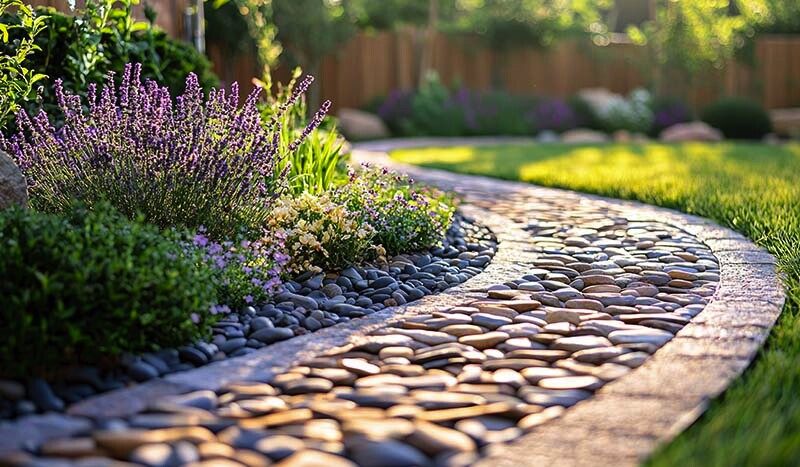
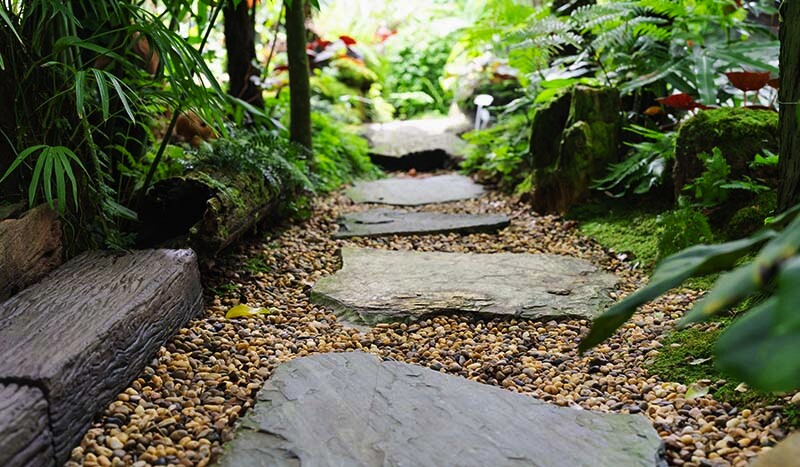
– gravel or small pebbles,
– permeable paving blocks,
– natural stone with wider joints,
– grass grids or grass pavers.
These solutions are particularly suitable for garden paths, parking areas, or courtyards in front of the house.
Tip
If you use gravel, place a geotextile layer underneath. This prevents mixing with soil and reduces weed growth, helping the path remain neat and stable for longer.
Choose Natural and Durable Materials
The choice of materials plays an important role in sustainable garden design. Natural materials often blend better with the surrounding environment and usually have a long lifespan.
Among the most popular options are:
– natural stone,
– brick or clinker,
– wooden boards or beams,
– recycled paving materials or concrete.
Natural stone, for example, is highly durable and fits well with many garden styles, from rustic to modern.
Tip
For smaller garden paths, you can use large stepping stones placed in grass or sand, allowing grass or low plants to grow between them. This creates a very natural and visually appealing path.
Plan Paths That Follow Natural Movement
A well-designed path should follow the natural movement through the garden. If paths are placed in impractical locations or too far from key areas, people tend not to use them.
It is therefore helpful to first consider:
– where people most often walk (for example from the house to the garden or garage),
– where stable surfaces are needed,
– which paths serve more decorative purposes.
Sometimes it is best to observe movement in the garden for a while before deciding on the final layout of the paths.
Tip
If you notice a naturally worn trail appearing in the lawn, it can serve as a useful guide for planning a future garden path.
Add Plants Along the Path
Sustainable gardens often combine hard surfaces with plants. Planting along paths softens the appearance of stone or paving and creates a more natural atmosphere.
Good options include:
– low-growing perennials,
– ornamental grasses,
– herbs,
– ground-cover plants.
Such plantings also attract pollinators and increase biodiversity in the garden.
Tip
Plant thyme or creeping thyme along the edge of a path. When stepped on, the plants release a pleasant fragrance and create a charming garden atmosphere.
Think About Multi-Purpose Courtyards
A courtyard in front of the house or near the garden can be much more than just a parking space. With a bit of planning, it can also become a pleasant area for relaxation or socializing.
When designing sustainable courtyards, consider:
– partially integrating greenery,
– using permeable paving solutions,
– adding small planting beds or trees.
Such solutions make the courtyard feel more natural and also help reduce heat buildup during the summer.
Tip
If the courtyard is larger, dedicate part of the space to a small tree or large planters, which provide shade and create a more pleasant microclimate.
Summary
Sustainable paths and courtyards combine practicality, aesthetics, and environmental responsibility. By using permeable materials, natural elements, and thoughtful design, you can create outdoor spaces that are pleasant to use and environmentally friendly.
When choosing materials, it is also worth considering solutions that are popular and well proven locally. Gravel or small pebbles are often used for garden paths because they are affordable and highly permeable. Porphyry stone is also very popular; this natural stone, available in slabs or cubes, is durable and suits both modern and rustic gardens. For courtyards or parking areas, grass pavers or grass grids are commonly used, allowing grass to grow while still providing a stable surface.
Spring is the ideal time to plan such improvements. With a few thoughtful changes, you can enhance the appearance of your garden and create a more functional outdoor space.
Sources
- Minster Paving – Garden Path Ideas
- RHS – Permeable Paving
- Garden Design – Garden Paths
- Gardeners’ World – Garden Path Ideas